
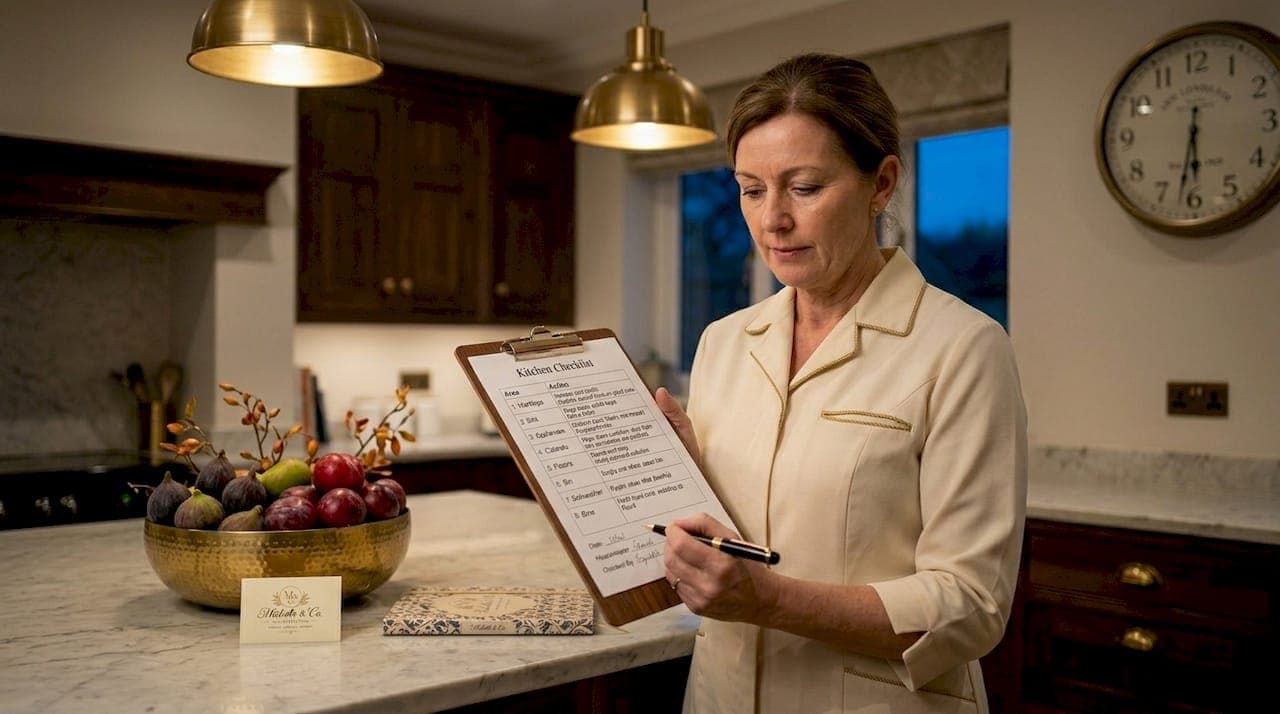
A structured, multi-step hiring process is the single most reliable method for finding trustworthy housekeeping staff who consistently meet your standards. The process of hiring reliable housekeeping staff typically takes two to four weeks and covers six distinct stages: defining your needs, sourcing candidates, interviewing, vetting, trialling, and onboarding. Skipping any stage increases the risk of a poor match, wasted time, and the discomfort of having an unsuitable person in your home. This guide gives you a practical checklist for hiring cleaners that covers every stage with precision, so you can make a confident, well-informed decision.
1. Define your needs before you advertise
The most common reason a housekeeper hire fails is that the homeowner never clearly defined what they needed in the first place. Before you speak to a single candidate, write down the specific duties you require. These might include general cleaning, laundry, ironing, silver polishing, caring for delicate fabrics, or managing household supplies.
Consider the following when building your job description:
- Frequency and hours: Do you need someone daily, twice weekly, or on a flexible schedule?
- Scope of duties: Separate cleaning tasks from household management tasks such as organising, errands, or overseeing tradespeople.
- Live-in or live-out: Live-in arrangements require additional considerations around accommodation, privacy, and working hours.
- Special care requirements: Antiques, artwork, delicate flooring, and specific cleaning products all warrant explicit mention.
- Budget: Research current market rates in your area to set a realistic figure before advertising.
Pro Tip: Write your job description as if you were briefing a professional agency. The more precise your brief, the more suitable the candidates you attract.
2. Source candidates through trusted channels

Where you find candidates matters as much as how you vet them. Personal recommendations from friends, family, or neighbours remain the most reliable source for private household roles. Reputable domestic staffing agencies carry out initial screening and can match candidates to your specific requirements, saving considerable time.
Online platforms dedicated to household staff, local community groups, and professional networks are secondary options. Avoid relying solely on general job boards, where the volume of unsuitable applications can obscure strong candidates. If you engage an agency, confirm that they conduct identity checks and reference verification as part of their standard process.
3. Conduct structured interviews with targeted questions
The interview stage is where you assess character, communication, and professionalism, not just experience. Prepare a consistent set of cleaning staff interview questions for every candidate so you can compare responses fairly.
Strong interview questions for housekeeping candidates include:
- What does your standard cleaning routine look like for a property of this size?
- How do you handle fragile or valuable items?
- Describe a situation where you made a mistake in a previous role. How did you resolve it?
- How do you prioritise tasks when time is limited?
- What cleaning products do you prefer, and are there any you avoid?
- How do you handle a complaint from a homeowner?
Vague or evasive answers to questions about mistakes or complaints are a clear warning sign. Candidates who demonstrate accountability and clear communication are far more likely to be reliable over time.
4. Verify references with specific, targeted questions
Many hiring failures originate from skipping or weakening reference checks. Contact at least three recent household references and ask targeted questions rather than accepting vague praise.
"The most revealing reference questions focus on reliability, reasons for leaving, and how the candidate handled difficult situations. Positive generalities tell you very little."
Ask each referee the following:
- How long did the candidate work for you, and why did they leave?
- Were they punctual and consistent in their attendance?
- Did they take initiative, or did they require constant direction?
- Would you rehire them without hesitation?
- Were there any incidents involving valuables, breakages, or complaints?
A referee who hesitates, gives short answers, or declines to say they would rehire is communicating something important. Treat that signal seriously.
5. Conduct background and identity checks
Background verification is non-negotiable for anyone working in your home. At minimum, confirm the candidate's identity using official documents such as a passport or driving licence. A Disclosure and Barring Service (DBS) check is advisable, particularly if vulnerable family members are present in the household.
Operational vetting details such as insurance, bonding, and how a candidate handles complaints reveal their professionalism and predict future reliability. Ask directly whether they carry public liability insurance and request written confirmation. A candidate who cannot provide proof of insurance should not be given access to your home.
6. Ask the right operational vetting questions
Beyond references and background checks, a thorough vetting checklist covers the practical details that determine whether a working relationship will run smoothly. These questions address logistics, professionalism, and accountability.
Key questions to ask before making an offer:
- Do you carry public liability insurance, and can you provide documentation?
- Do you bring your own cleaning supplies and equipment, or do you use the homeowner's?
- What is your cancellation policy if you are unable to attend a scheduled visit?
- How do you handle a situation where a homeowner is dissatisfied with your work?
- Are you comfortable with pets, specific cleaning products, or security systems?
Candidates who answer these questions clearly and without hesitation demonstrate the kind of professionalism that translates into dependable service.
7. Run a structured trial period
A two to four week trial with written standards evaluated against quality, punctuality, and communication metrics gives you dependable insight before making a long-term commitment. Treat this period as a formal assessment, not an informal arrangement.
During the trial, evaluate the following:
- Quality of work: Does the standard of cleaning match your written expectations consistently?
- Punctuality: Does the candidate arrive on time and complete tasks within the agreed schedule?
- Communication: Do they flag issues, ask sensible questions, and respond to feedback constructively?
- Discretion: Do they handle your personal space and belongings with appropriate care and respect?
Pro Tip: Provide written feedback at the end of each trial week. This sets a professional tone, gives the candidate clear guidance, and creates a record you can refer to during the formal review.
Adopt a 90-day probationary mindset. The structured onboarding period should include written cleaning standards, product preferences, schedules, and security arrangements within the first 30 days, followed by a formal performance review at 90 days.
8. Build a detailed housekeeping checklist for daily and weekly tasks
A room-by-room housekeeping checklist with clear frequency instructions reduces missed steps and creates a consistent standard that does not depend on memory or personal interpretation. This is the operational backbone of effective housekeeping staff selection.
The table below illustrates how to structure a basic checklist framework:
| Room or area | Daily tasks | Weekly tasks |
|---|---|---|
| Kitchen | Wipe surfaces, clean hob, empty bins | Deep clean oven, descale kettle, organise cupboards |
| Bathrooms | Clean basin and toilet, replace towels | Scrub tiles, descale shower, clean mirrors |
| Reception rooms | Vacuum, dust surfaces, plump cushions | Polish furniture, clean skirting boards, wash throws |
| Bedrooms | Make beds, tidy surfaces | Change bed linen, vacuum under furniture |
| Hallways and stairs | Sweep or vacuum | Wipe bannisters, clean light switches |
Include your preferred cleaning products, any items that must not be touched, and notes on special care requirements. Checklists function as a living system; update them based on real workflow observations to capture edge cases and improve consistency over time.
9. Establish clear onboarding documentation
Onboarding reliability is built on documentation, not assumption. Provide your new housekeeper with a written welcome pack that covers house rules, security codes, emergency contacts, product locations, and any areas that require particular attention. This removes ambiguity and sets a professional standard from day one.
Schedule a formal check-in at the end of the first month to review progress, address any questions, and refine the checklist based on what you have both observed. A 90-day review focused on quality and communication gives you a structured opportunity to confirm the hire or address concerns before they become entrenched habits.
Key takeaways
Hiring reliable housekeeping staff requires a structured checklist covering needs definition, thorough vetting, a formal trial period, and clear onboarding documentation to guarantee consistent, trustworthy service.
| Point | Details |
|---|---|
| Define needs precisely | Write a detailed job description covering duties, hours, and special care requirements before advertising. |
| Vet with specificity | Contact at least three references with targeted questions and confirm insurance and background checks. |
| Trial before committing | Run a two to four week trial evaluated against written quality, punctuality, and communication standards. |
| Maintain a living checklist | Build a room-by-room task list and update it regularly based on real workflow observations. |
| Document onboarding formally | Provide a written welcome pack and schedule a 90-day review to confirm fit and address any issues. |
Why the relationship matters as much as the checklist
The hiring checklist gets the right person through the door. What keeps them performing to a high standard over months and years is the working relationship you build with them.
In my experience, the homeowners who retain excellent housekeeping staff longest are those who treat the role with the same professionalism they would expect from any other service provider. That means clear written expectations from the start, regular feedback that is specific rather than vague, and fair compensation that reflects the skill and discretion the role demands.
The most common mistake I see is homeowners who invest heavily in the hiring process and then neglect the ongoing relationship. A housekeeper who feels respected, well-briefed, and fairly treated will take genuine pride in their work. One who receives no feedback, inconsistent instructions, or irregular pay will disengage, and the quality of your home's presentation will reflect that.
Treat check-ins as a professional courtesy, not a sign of distrust. A brief monthly conversation about what is working well and what could be improved costs very little time and prevents the kind of accumulated frustration that leads to sudden departures. The Michelleandcohousekeeping blog covers practical guidance on maintaining strong working relationships with household staff if you want to explore this further.
The best housekeeping arrangements are built on mutual respect and clear communication. The checklist creates the structure. The relationship sustains the standard.
— Simon
How Michelleandcohousekeeping takes the complexity out of hiring

Michelleandcohousekeeping provides premium housekeeping and domestic cleaning services across Cheshire, including Wilmslow, Alderley Edge, and Knutsford. Every member of the team is pre-screened with verified references and background checks, so you receive dependable, discreet service without the time and uncertainty of managing the hiring process yourself. Customised housekeeping checklists are built around your home and lifestyle, and structured onboarding means standards are consistent from the very first visit. If you are ready to experience genuinely reliable home care, request a quote or explore the full range of housekeeping services available to homeowners across the region.
FAQ
How long does it take to hire a reliable housekeeper?
Hiring a reliable housekeeper typically takes two to four weeks when you follow a structured process covering needs definition, interviews, reference checks, and a trial period. Rushing any stage increases the risk of a poor match.
How many references should I check before hiring housekeeping staff?
Contact at least three recent private household references and ask specific questions about reliability, punctuality, and reasons for leaving. Vague or hesitant answers from referees are as informative as negative ones.
What should a housekeeping checklist include?
A well-structured checklist covers room-by-room tasks with daily and weekly frequencies, preferred cleaning products, special care instructions, and a clear list of included and excluded duties. Update it regularly based on what you observe during the first few months.
Is a trial period necessary when hiring a housekeeper?
A two to four week trial evaluated against written standards for quality, punctuality, and communication is the most reliable way to confirm a candidate's suitability before making a long-term commitment. Adopting a 90-day probationary mindset gives you sufficient time to assess consistency.
What insurance should a housekeeper carry?
Public liability insurance is the minimum requirement for any housekeeper working in a private home. Request written confirmation before the first visit, and treat the absence of insurance documentation as a firm reason not to proceed.