
A housekeeping checklist is a structured list of specific cleaning and maintenance tasks organised to keep your home consistently tidy, functional, and well-presented. Known in professional domestic settings as a cleaning schedule or task register, it transforms the vague intention of "keeping the house clean" into a concrete, repeatable system. Whether you own your home or rent it, a well-designed checklist removes the guesswork, distributes the workload sensibly across the week, and gives you an auditable record of what has been done and when.
What is a housekeeping checklist and how does it work?
A housekeeping checklist works by breaking your home's cleaning demands into manageable categories, typically organised by frequency. Daily, weekly, and monthly schedules distribute the workload so that no single session becomes unmanageable. This structure is the difference between a home that feels perpetually behind and one that stays consistently presentable with modest, regular effort.
The checklist functions as both a planning tool and an accountability record. Each task is written as a clear action, assigned to a timeframe, and ticked off on completion. Checklist optimisation principles recommend using a master system with concrete action wording and structured categories rather than vague topics or mixed processes. "Wipe kitchen surfaces" is a task. "Kitchen hygiene" is a topic. The distinction matters because vague wording leads to inconsistency and, eventually, a checklist that nobody trusts or uses.
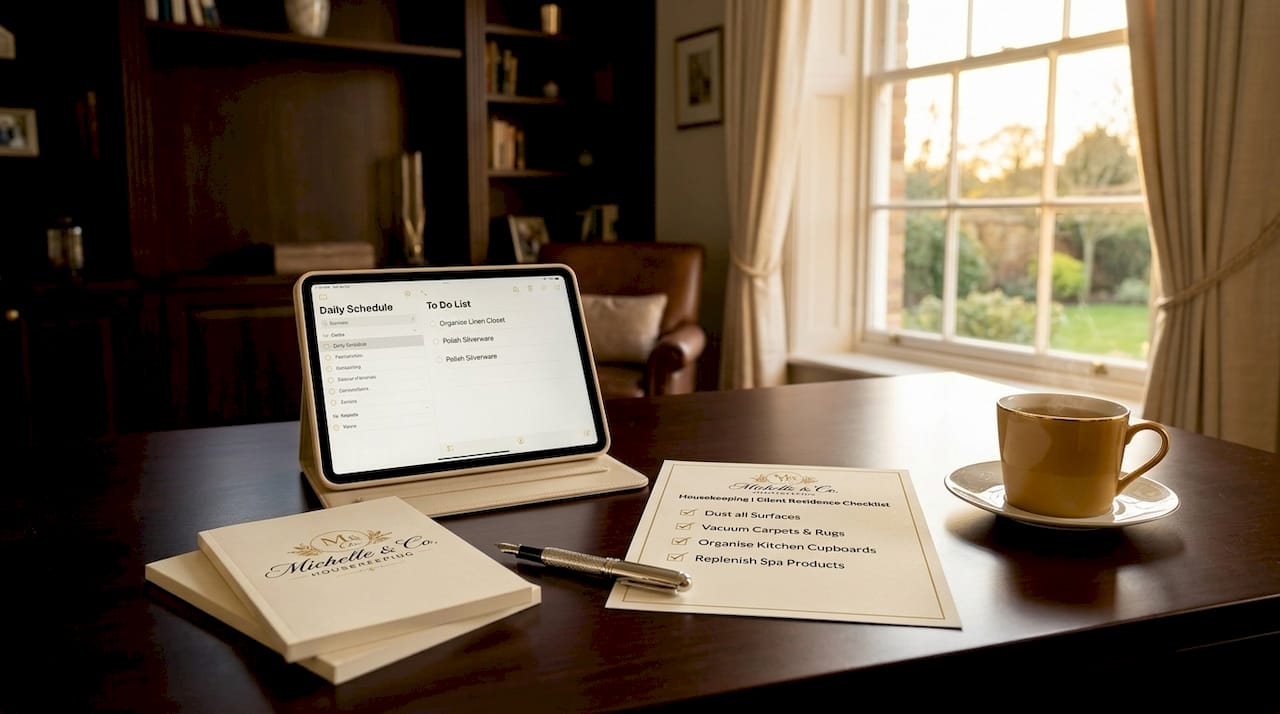
Hotel and facility housekeeping teams have relied on this approach for decades. Professional housekeeping checklists set quality standards that prevent overlooked details during rapid room turnovers. The same principle applies at home: a checklist is not a sign of poor memory. It is a professional standard applied to your own space.
How to structure an effective housekeeping checklist
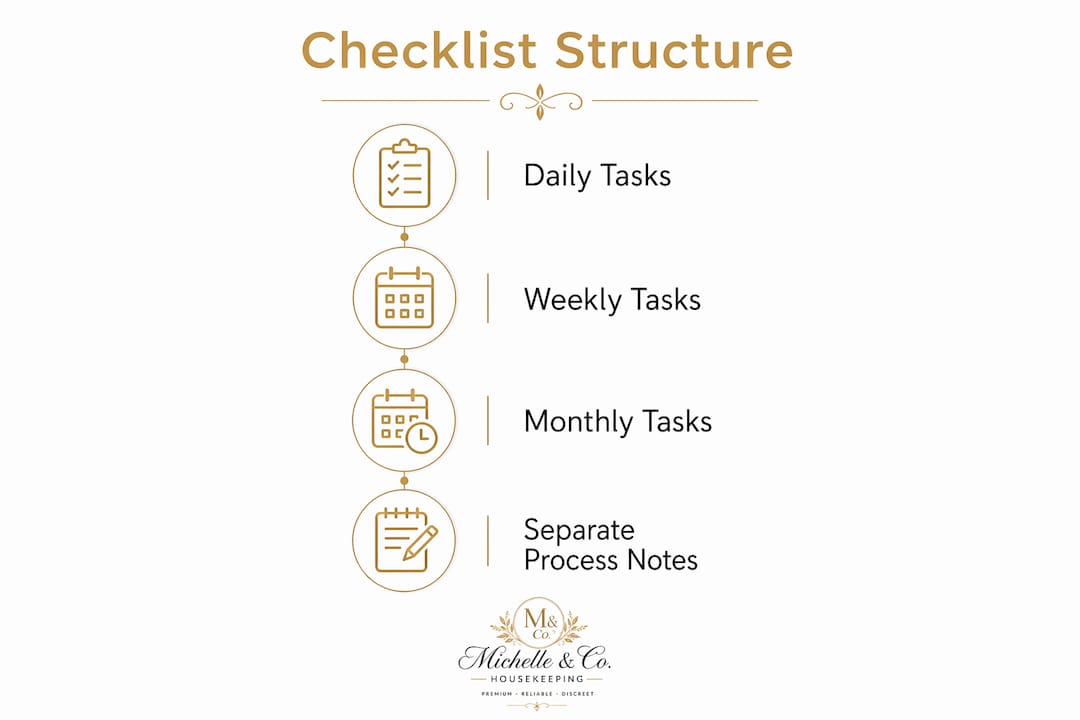
Structure is what separates a useful checklist from a list that gets abandoned after a fortnight. The most practical approach divides tasks into three tiers.
Daily tasks address the small actions that prevent mess from accumulating. These include wiping down kitchen surfaces after cooking, loading and unloading the dishwasher, making beds, and a quick bathroom wipe. None of these takes more than a few minutes, but skipping them consistently creates the kind of buildup that demands a full afternoon to resolve.
Weekly tasks tackle the gradual accumulation that daily habits cannot address. Vacuuming, mopping floors, cleaning the bathroom thoroughly, changing bed linen, and wiping down appliances all belong here. Assigning specific rooms to specific days prevents the weekly clean from feeling like a single overwhelming block of work.
Monthly tasks cover the details that are easy to overlook but matter for the long-term condition of your home. These include cleaning inside the oven, descaling the kettle and shower head, wiping skirting boards, and washing curtains or blinds.
Pro Tip: Separate your task list from your process notes. A task is a single outcome: "clean bathroom mirror." A process is a repeatable workflow: "reset kitchen after cooking." Mixing the two on the same list creates visual clutter and confusion.
The table below illustrates how a sample housekeeping checklist guide might distribute tasks across timeframes:
| Frequency | Example tasks | Time required |
|---|---|---|
| Daily | Wipe surfaces, load dishwasher, make beds | 15 to 30 minutes |
| Weekly | Vacuum, mop, clean bathroom, change linen | 1.5 to 2.5 hours |
| Monthly | Oven clean, descale, skirting boards, windows | 2 to 3 hours |
Adding a "completed" column to each section transforms the checklist into an auditable record. This is particularly useful for households with shared responsibilities, where accountability matters, and for renters who may need to demonstrate the condition of a property.
What tasks should every home cleaning checklist include?
The tasks on your checklist will reflect your home's size and layout, but certain areas demand attention in every household. High-touch surfaces are the most frequently missed category in standard house cleaning routines.
Door handles, light switches, taps, and phones require consistent cleaning with a disinfectant left visibly wet for the full contact time, typically one to ten minutes. Wiping a surface and immediately drying it defeats the purpose of disinfection. This single detail separates a home that looks clean from one that genuinely is.
Daily tasks for every home:
- Wipe kitchen worktops and hob after use
- Rinse and stack or load dishes
- Wipe bathroom basin and tap
- Sweep or spot-clean kitchen floor
- Remove clutter from living areas
Weekly tasks by room:
- Kitchen: Clean inside microwave, wipe appliance exteriors, clean sink and drain
- Bathroom: Scrub toilet, clean shower or bath, mop floor, replace towels
- Bedrooms: Change bed linen, vacuum floors and under furniture, dust surfaces
- Living areas: Vacuum upholstery, dust shelving and skirting boards, clean glass surfaces
Monthly deep-cleaning tasks:
- Clean oven interior and extractor filter
- Descale kettle, shower head, and taps
- Wash bin liners and clean bin interiors
- Wipe down interior cupboard shelves
- Clean behind and beneath large appliances
Room-specific task lists like these reflect the detail level found in professional tenancy inspection checklists, where every surface and fitting is accounted for individually. Applying that same granularity to your regular routine means nothing is left to chance.
How to create a cleaning checklist that suits your lifestyle
The most effective checklist is one you will actually use. Building a routine with daily habits first and adding weekly tasks gradually makes the process sustainable rather than overwhelming. Starting with a full monthly schedule on day one is the most common reason people abandon their cleaning routine within two weeks.
Begin by writing down every task you currently do, regardless of frequency. Then assign each one to a realistic timeframe. Be honest about how long tasks actually take. A bathroom clean that you estimate at ten minutes but consistently takes twenty-five will create a schedule that falls apart every week.
Pro Tip: Choose one system and commit to it. Whether you use a printed sheet on the fridge, a notes app, or a dedicated tool like Notion or Google Tasks, the format matters far less than consistency. Switching systems every few weeks resets your routine.
A few principles that make checklists sustainable over time:
- Write every task as a specific action, not a category. "Vacuum living room" rather than "floors."
- Set a realistic time budget for each session before you begin.
- Review and update the checklist every three months. Seasonal tasks, such as cleaning garden furniture or checking radiators, need to be added and removed as the year progresses.
- Skip tasks without guilt when life intervenes. A checklist is a guide, not a contract. Checklist clarity and actionable wording are what keep it useful and supportive rather than a source of stress.
The goal is a living document that reflects your actual household, not an idealised version of it.
Why checklists matter for renters and end-of-tenancy inspections
For renters, a housekeeping checklist carries additional weight. End-of-tenancy checklists are structured to return a property to its move-in condition, with room-by-room tasks and a scheduled mutual inspection with the managing agent. The checklist becomes evidence, not just a to-do list.
Auditable end-of-tenancy checklists include a "check when complete" column and group tasks by room, creating a documented record that can resolve deposit disputes before they escalate. A renter who can present a signed, dated checklist is in a far stronger position than one who relies on memory alone.
The table below compares a standard home cleaning checklist with an end-of-tenancy checklist to illustrate the differences in purpose and detail:
| Feature | Regular home checklist | End-of-tenancy checklist |
|---|---|---|
| Purpose | Ongoing maintenance | Return property to original condition |
| Detail level | Task-based by frequency | Room-by-room, item-by-item |
| Completion record | Optional | Required for dispute resolution |
| Scheduling | Flexible, self-directed | Tied to inspection date with agent |
| Scope | Routine cleaning tasks | Includes repairs, replacements, deep clean |
Renters who maintain a regular house cleaning routine throughout their tenancy find the end-of-tenancy process significantly less stressful. The deep clean at the end is far less demanding when the property has been maintained consistently. Understanding post-tenancy grime buildup and its implications reinforces why consistent upkeep throughout a tenancy protects both your deposit and your relationship with the landlord.
Key takeaways
A housekeeping checklist works because it converts cleaning from an open-ended obligation into a specific, time-bound, and auditable set of actions.
| Point | Details |
|---|---|
| Structure by frequency | Divide tasks into daily, weekly, and monthly tiers to distribute workload and prevent buildup. |
| Use action wording | Write every task as a specific action, not a category, to maintain clarity and trust in the system. |
| Prioritise high-touch surfaces | Disinfect door handles, switches, and taps with correct contact times for genuine hygiene. |
| Make it auditable | Add a completion column to create a record useful for shared households and tenancy inspections. |
| Build gradually | Start with daily habits and add weekly tasks over time to keep the routine sustainable. |
Why I think most people approach checklists the wrong way
Most housekeeping advice focuses on what to clean. The harder question is how to design a checklist you will still be using six months from now. In my experience, the lists that fail are almost always too ambitious at the start and too vague in their wording. "Clean kitchen" on a checklist is not a task. It is a source of low-level dread that gets avoided.
The checklists that work are almost boring in their specificity. "Wipe hob, clean sink, empty bin." Three tasks, three minutes each, done. That specificity is what makes the difference between a checklist that reduces stress and one that adds to it.
I have also seen households where the checklist itself becomes a point of conflict, particularly when shared between partners or family members. The fix is almost always the same: agree on the tasks, assign them clearly, and remove any language that sounds like a performance review. A checklist should feel like a shared tool, not a report card.
The other pitfall worth naming is the temptation to build the perfect system before starting. A printed A4 sheet with three columns and a pencil is more effective than a beautifully designed app you spend two weeks setting up and never open again. Start simple. Refine as you go.
— Simon
How Michelleandcohousekeeping can support your routine

A well-designed checklist handles the day-to-day, but some tasks genuinely benefit from professional attention. Michelleandcohousekeeping provides premium housekeeping and domestic cleaning services across Cheshire, including Wilmslow, Alderley Edge, and Knutsford, covering everything from regular housekeeping visits to deep cleans and end-of-tenancy cleans. Whether you need a one-off deep clean to reset your home or a regular professional housekeeping service to complement your own routine, the team delivers consistently exceptional results with the discretion and attention to detail that a well-presented home deserves. Request a personalised quote to find a service that fits your household and schedule.
FAQ
What is a housekeeping checklist used for?
A housekeeping checklist is a structured list of cleaning and maintenance tasks used to keep a home consistently clean and organised. It distributes workload across daily, weekly, and monthly timeframes to prevent buildup and reduce the effort required for each session.
How often should I update my cleaning checklist?
Review your checklist every three months to add seasonal tasks and remove those that are no longer relevant. A checklist that reflects your actual household is far more likely to be used consistently than one built for an idealised routine.
What should I include in an end-of-tenancy checklist?
An end-of-tenancy checklist should cover every room with item-level tasks, a completion column, and a scheduled inspection date. Room-by-room task grouping and a signed record protect renters in deposit disputes.
How do I make a cleaning checklist I will actually stick to?
Start with daily habits and add weekly tasks gradually rather than building a full schedule from day one. Write every task as a specific action and choose one format, whether printed or digital, and use it consistently.
Why are high-touch surfaces a priority on any cleaning checklist?
High-touch surfaces such as door handles, light switches, and taps carry the highest concentration of bacteria and viruses in a home. Effective disinfection requires the disinfectant to remain visibly wet on the surface for the full contact time, typically one to ten minutes, before wiping.