
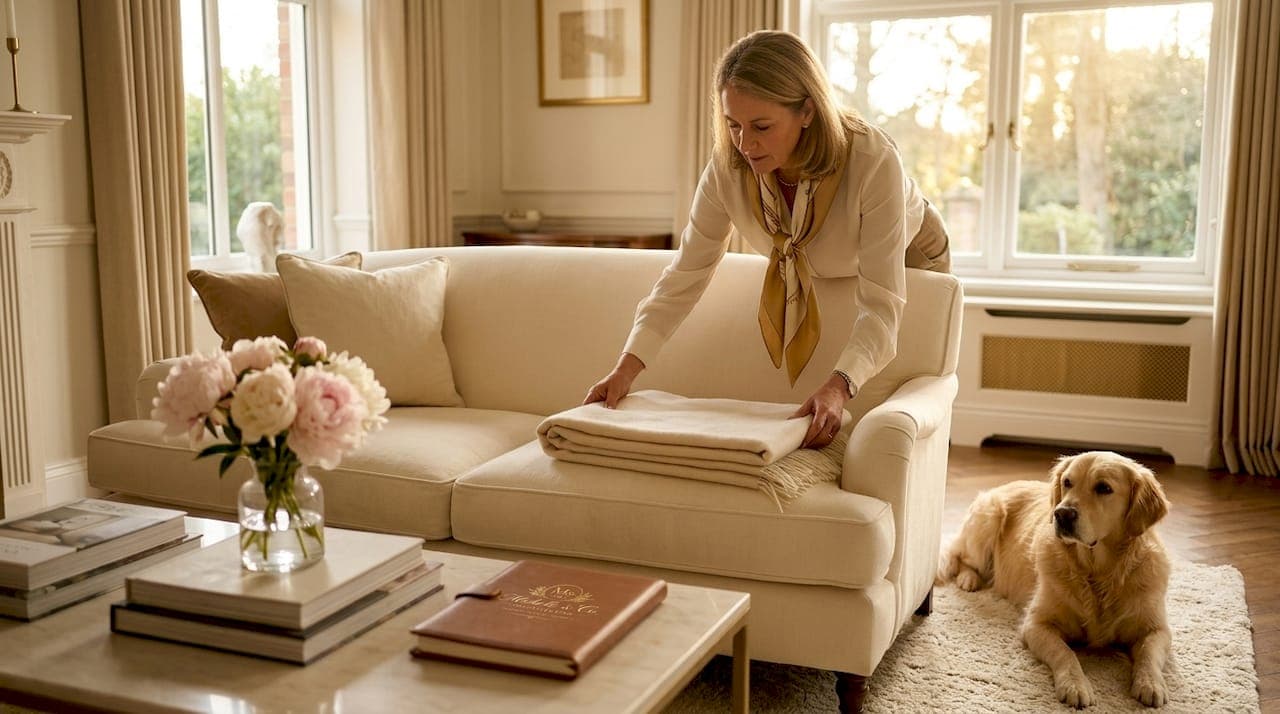
Preparing your home for a housekeeper means decluttering surfaces, securing pets, and communicating priorities clearly before arrival, so every minute of the visit is spent on actual cleaning rather than navigating obstacles. This is the single most effective thing you can do to maximise the value of a professional housekeeping service. Whether you are setting up your home for a cleaner for the first time or refining a routine that has grown a little loose, the principles are consistent: remove barriers, communicate expectations, and trust the professionals to do what they do best. Michelleandcohousekeeping works with homeowners across Wilmslow, Alderley Edge, and Knutsford, and the homes that get the most from each visit are invariably the ones that arrive prepared.
What essential tasks must be done before a housekeeper arrives?
The core of any housekeeper preparation is decluttering, not pre-cleaning. Clutter items like dishes, packages, clothes, and toys block vacuuming and prevent access to the surfaces that actually need attention. Your housekeeper is there to clean, not to sort through belongings. Removing that barrier is your job, and it takes far less time than most people expect.
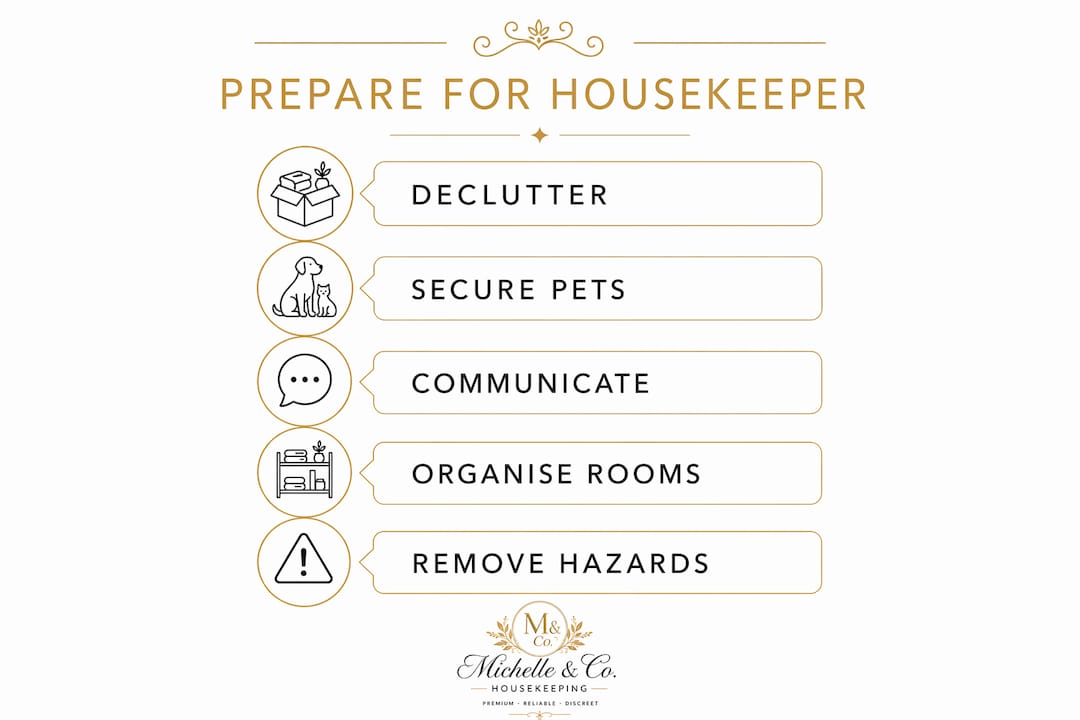
Here is what to address before your housekeeper arrives:
- Declutter counters, tables, and floors. Clear worktops in the kitchen and bathroom, pick up items from the floor, and move anything that does not belong in a room to its correct location. This alone can save your housekeeper 20 to 30 minutes per visit.
- Deal with the dishes. Loading dishes into the dishwasher before the cleaner arrives prevents time loss and avoids potential extra charges. Many housekeepers do not include dishwashing in a standard clean; a full sink delays everything else.
- Secure your pets. Pets secured in a safe space or crate prevent disruptions, protect cleaning equipment, and keep both your housekeeper and your animals safe. A dog following a cleaner from room to room is charming in theory and genuinely disruptive in practice.
- Remove health and safety hazards. Biohazards and mould present risks that housekeepers are not equipped to handle. Blood, urine, faeces, or visible mould must be addressed by the homeowner before the visit.
- Put away valuables and sentimental items. Storing valuables safely before cleaning protects them from accidental damage or misplacement and removes any ambiguity for your housekeeper. Jewellery, important documents, and irreplaceable objects should be secured in a drawer or cabinet.
Pro Tip: Set a 15-minute timer before your housekeeper arrives and do a single sweep of each room, placing misplaced items into a basket to sort later. This is faster than tidying room by room and clears the space without consuming your morning.
How to organise your home for cleaning efficiency
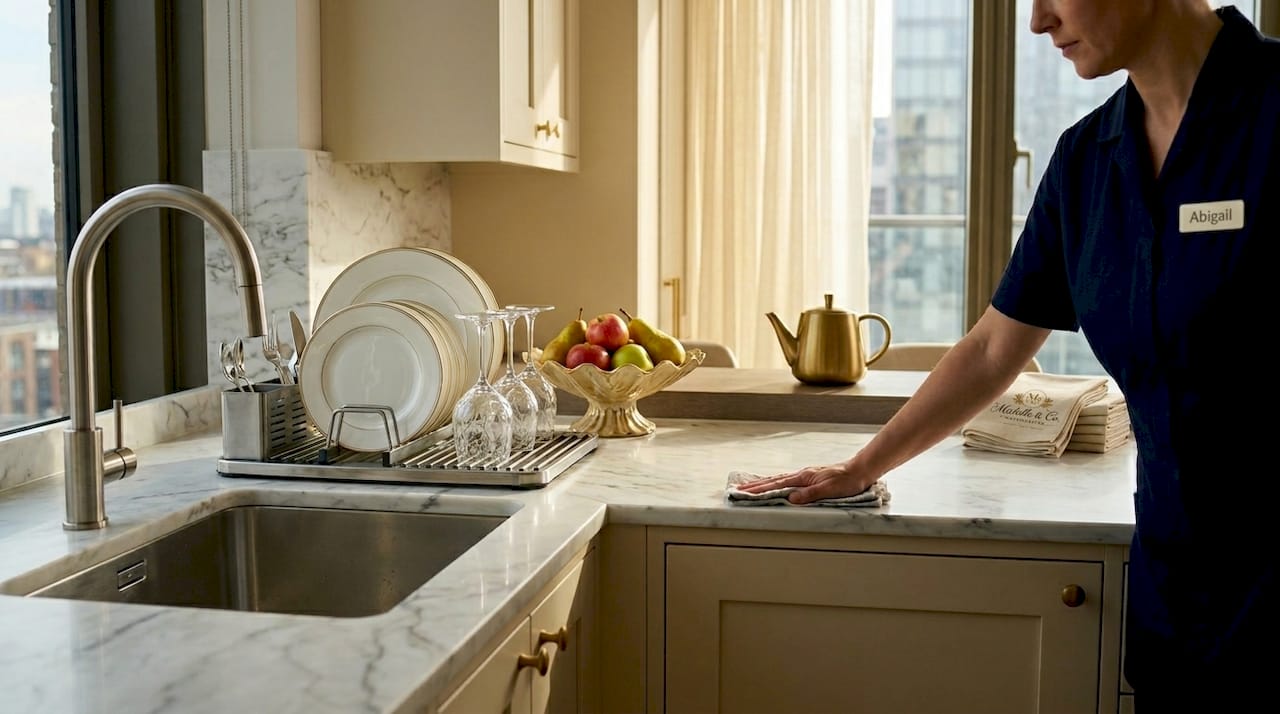
An organised approach to staging your home before a clean is not about doing the housekeeper's job for them. It is about removing the friction that slows professional cleaning down. Effective cleaning follows a top-down sequence and requires picking up clutter before surfaces and floors are addressed. When you stage your home with this sequence in mind, you and your housekeeper work in the same direction rather than against each other.
Follow these steps to organise your home before a cleaning visit:
- Pick up from the floor first. Clothes, shoes, bags, and children's toys on the floor prevent vacuuming entirely. Gather them into their correct rooms or a designated basket before anything else.
- Group items by destination. Rather than putting every item away individually, sort them into piles by room. This speeds up tidying considerably and mirrors the staged approach to tidying that reduces rework during cleaning.
- Prioritise bathrooms and the kitchen. These rooms take the most time to clean properly. Clear the bathroom vanity of toiletries, remove items from the shower shelf, and wipe away any standing water. In the kitchen, clear the hob and worktops of appliances you do not use daily.
- Use simple storage solutions. Baskets, trays, and organised linen cupboards give your housekeeper clear surfaces to work with and reduce the time spent moving items around. A tray on a bathroom vanity keeps toiletries contained and easy to lift as a single unit.
- Do not pre-clean. This is the step most homeowners get wrong. Pre-cleaning obscures true cleaning requirements and wastes your time. Scrubbing the bathroom before your housekeeper arrives means you have paid for a service you have already performed yourself.
Here is a quick reference for which rooms to prioritise and what to address in each:
| Room | What to prepare |
|---|---|
| Kitchen | Clear worktops, load dishwasher, remove items from hob |
| Bathroom | Clear vanity, remove shower items, put away towels |
| Bedrooms | Pick up clothes, clear bedside tables, make space on floors |
| Living areas | Remove clutter from surfaces, pick up from floors, tidy cushions |
Pro Tip: Keep a small basket in each room permanently. Before a housekeeper visit, do a single pass and drop misplaced items into the basket. Empty the baskets into their correct rooms in one go. The whole process takes under ten minutes for most homes.
What communication and etiquette practices improve housekeeper visits?
Clear communication is the difference between a good clean and an exceptional one. Housekeepers are not mind readers; clear requests improve focus and efficiency in ways that no amount of preparation can replace. Establishing a simple communication routine before each visit pays dividends over time, particularly for regular housekeeping arrangements.
Consider these communication and etiquette practices:
- State your priorities before arrival. If the guest bedroom needs particular attention this week, say so. If you want the oven included, confirm it in advance. Do not assume your housekeeper will infer priorities from context.
- Define off-limit areas and delicate items. Antiques, fragile ornaments, and personal collections should be pointed out clearly. A brief note or a quick message the day before is sufficient and removes any uncertainty.
- Clarify the dishes policy. Discuss upfront whether dishwashing is included in your service. A clear protocol for handling unfinished tasks avoids confusion and ensures neither party feels the arrangement is unfair.
- Communicate about pets. Let your housekeeper know where pets will be secured and whether any rooms are off-limits because of animals. If you use a pet waste service for garden areas, confirm whether the garden is part of the clean or excluded.
- Establish a feedback channel. Whether by text, a note left in the home, or a brief conversation at the end of the visit, a consistent way to give and receive feedback builds trust and improves results over time.
Respectful etiquette matters as much as practical preparation. Ensure your housekeeper has access to the property at the agreed time, that cleaning products they need are available if they do not supply their own, and that the home is at a reasonable temperature to work in comfortably.
Troubleshooting common preparation mistakes and how to avoid them
Most preparation errors fall into a small number of predictable patterns. Recognising them in advance saves time, money, and the mild frustration of a visit that does not go as planned.
- Over-cleaning before the visit. Scrubbing surfaces, mopping floors, or cleaning the bathroom yourself before your housekeeper arrives is the most common mistake. It wastes your time and prevents your housekeeper from accurately assessing what the home needs. Tidying is sufficient; cleaning is their role.
- Leaving clutter that blocks access. Items on the floor are not a minor inconvenience. They prevent vacuuming entirely and force your housekeeper to spend time moving belongings rather than cleaning. A clear floor is the single most impactful thing you can do.
- Failing to secure pets. An unsecured dog or cat does not just slow cleaning down. It can cause accidents with equipment, stress the animal, and create genuine safety concerns. Secure pets before the visit, every time.
- Ignoring hazardous materials. Mould, biohazards, or chemical spills are not within the scope of standard housekeeping. Leaving them in place puts your housekeeper at risk and may result in those areas being left untouched entirely.
- Leaving valuables unsecured. This is not about distrust. It is about removing ambiguity. A housekeeper who moves a document or a piece of jewellery while cleaning has no way of knowing where it belongs. Securing valuables protects both parties.
The most common complaint from professional housekeepers is not the state of the home. It is the lack of clear instruction. A brief note listing priorities and any off-limit areas resolves the majority of issues before they arise.
Key takeaways
Preparing your home for a housekeeper requires decluttering surfaces, securing pets, removing hazards, and communicating priorities clearly before arrival to maximise cleaning efficiency and results.
| Point | Details |
|---|---|
| Declutter, do not pre-clean | Remove clutter and pick up from floors; scrubbing surfaces yourself wastes time and obscures cleaning needs. |
| Secure pets before every visit | Pets must be in a safe space to prevent disruption, equipment damage, and safety risks. |
| Address hazards in advance | Biohazards and mould must be resolved by the homeowner; housekeepers cannot safely handle them. |
| Communicate priorities clearly | State specific requests and off-limit areas before arrival; do not rely on your housekeeper to infer them. |
| Protect valuables and documents | Secure jewellery, important papers, and fragile items to prevent accidental damage or misplacement. |
What I have learned from watching homes get cleaned properly
After years of working alongside housekeeping professionals in Cheshire, the pattern I keep observing is this: the homes that get the most from a professional clean are not the tidiest homes. They are the homes where the owner has made a deliberate decision to trust the process.
The instinct to pre-clean before a housekeeper arrives is understandable. There is something uncomfortable about letting someone see your home at its most lived-in. But that instinct works against you. A housekeeper who arrives to find a home that has already been scrubbed cannot assess what genuinely needs attention, and you have spent an hour doing work you were paying someone else to do.
What I have found actually works is a 15-minute declutter and a short written note. The note lists the two or three things that matter most this week, any areas to avoid, and whether anything in the home has changed since the last visit. That is it. No deep clean, no rearranging furniture, no elaborate preparation. Just clear surfaces and clear communication.
The other thing most homeowners overlook is the cumulative benefit of consistency. A housekeeper who visits regularly and receives clear, consistent communication builds an understanding of your home that no amount of one-off preparation can replicate. That relationship, built on mutual respect and honest dialogue, is where the real value of professional housekeeping lies. You can read more on this topic and others on the Michelleandcohousekeeping blog.
— Simon
Discover the difference a prepared home makes with Michelleandcohousekeeping
When your home is prepared and your priorities are clear, a professional housekeeper can deliver results that go far beyond a standard clean. Michelleandcohousekeeping provides premium housekeeping and domestic cleaning services across Cheshire, including Wilmslow, Alderley Edge, and Knutsford, tailored to the specific needs of each home.

From regular housekeeping visits to deep cleans and end of tenancy services, every appointment is handled with discretion, attention to detail, and a genuine commitment to maintaining beautifully presented homes. If you are ready to experience the difference that professional, bespoke home care makes, request a personalised quote or visit the Michelleandcohousekeeping homepage to learn more about the services available in your area.
FAQ
What does it mean to prepare your home for a housekeeper?
Preparing your home for a housekeeper means decluttering surfaces, picking up items from the floor, securing pets, removing hazards, and communicating your priorities before the visit. The goal is to remove barriers so your housekeeper can focus entirely on cleaning.
Should I clean before my housekeeper arrives?
No. Pre-cleaning wastes your time and obscures what the home genuinely needs. Tidying and decluttering are sufficient; cleaning is the housekeeper's role.
How do I organise my home for cleaning day?
Work top-down: clear surfaces first, then pick up from the floor. Group misplaced items by room and use baskets to speed up the process. Prioritise the kitchen and bathrooms, as these take the most time to clean thoroughly.
What should I tell my housekeeper before they arrive?
State your top two or three priorities for the visit, identify any off-limit areas or delicate items, and confirm whether dishes or any additional tasks are included in the service. A brief written note or message the day before is sufficient.
Do I need to secure my pets during a housekeeping visit?
Yes. Pets should be secured in a safe space for the duration of the visit to prevent disruptions, protect cleaning equipment, and avoid safety risks for both the animal and the housekeeper.